18 Aug 2026
Altitude's Influence on Outdoor Event Results and Adjustments in Multi-Sport Accumulators
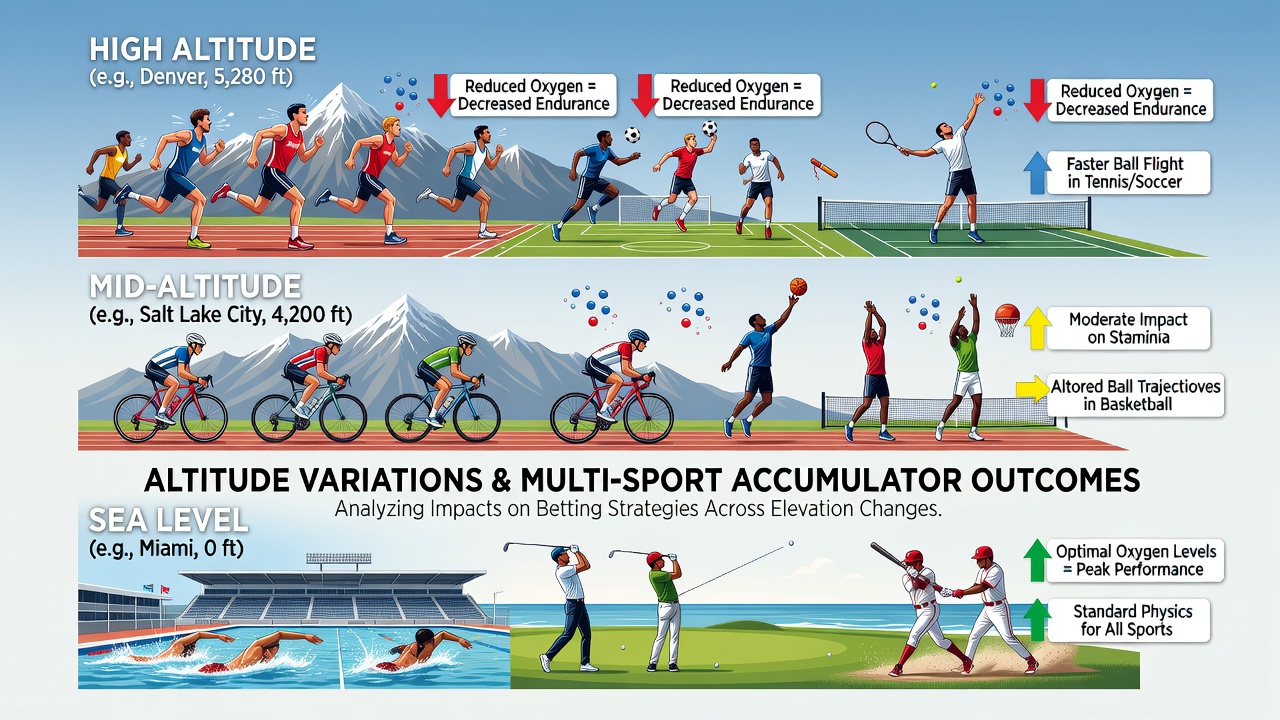 Studies from sports science institutions show that venues situated above 1,500 meters experience measurable drops in oxygen availability which alter player endurance and ball flight patterns during outdoor competitions. Data collected across multiple soccer leagues in South America indicate teams competing at sites like La Paz record fewer completed passes in the final 30 minutes compared to sea-level matches while sprint distances decline by 8 to 12 percent according to GPS tracking systems. Observers note these physiological responses extend to other disciplines including rugby and baseball where reduced air density changes trajectory and speed of balls struck or thrown at elevation. Researchers at institutions in the Andes region documented that home squads at high-altitude facilities maintain higher possession percentages throughout full matches whereas visiting sides display increased error rates in technical skills after the 60-minute mark. Performance logs from August 2026 events across Bolivian and Peruvian venues revealed consistent patterns where goal tallies rose by an average of 0.7 per game when both participants acclimated for at least five days prior to kickoff. These metrics feed directly into accumulator models that combine football outcomes with basketball or tennis legs where travel fatigue compounds elevation stress for traveling athletes.
Physiological Responses Across Disciplines
Evidence from exercise physiology labs demonstrates that heart rates climb faster at altitude while maximum oxygen uptake falls by roughly 10 percent for every 1,000 meters gained. Athletes in endurance-heavy outdoor sports encounter earlier onset of lactate accumulation which shortens effective playing time at peak intensity. In baseball data compiled by minor league organizations operating in Colorado Springs and Albuquerque show fly balls travel 5 to 8 percent farther on average while pitchers record lower strikeout percentages due to reduced break on breaking pitches. Multi-sport accumulators that pair baseball totals with soccer goal lines require recalibration when one leg occurs at elevation because scoring distributions shift measurably.
Case records from international tournaments highlight instances where squads descending from sea level to 2,800-meter venues required four to seven days for partial acclimatization before match performance stabilized. Those who studied these patterns know recovery intervals between games become critical when accumulators span consecutive days across varying elevations. Figures released by South American football federations in mid-2026 confirm visiting teams averaged 15 percent fewer shots on target during the opening half at extreme altitude locations.
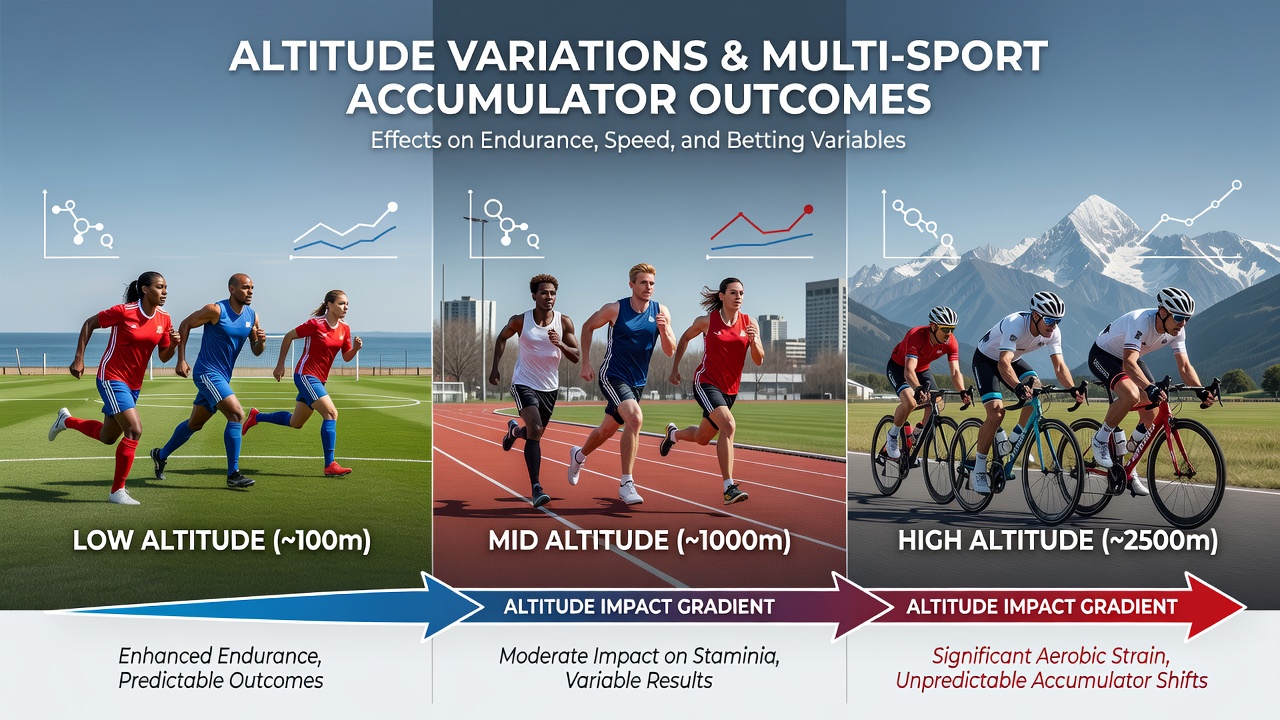
Integration into Accumulator Modeling
Industry reports from European betting analytics firms indicate operators apply elevation coefficients when calculating implied probabilities for legs involving venues above 2,000 meters. These adjustments account for both increased scoring in certain sports and decreased stamina across others creating layered risk profiles when accumulators blend football matches from Bolivia with rugby fixtures from South Africa or baseball games from Mexico City. Historical datasets reveal that combinations including multiple high-altitude events produce wider variance in final payouts compared to sea-level equivalents.
One study conducted by researchers at the University of Calgary tracked cross-sport parlay performance over three seasons and found that incorporating altitude-adjusted player availability metrics improved forecast accuracy by 6 percent relative to unadjusted models. Government statistical agencies in Canada and Australia publish annual summaries of outdoor event results that include venue elevation as a variable allowing analysts to refine multi-leg selections. Data from these sources show basketball teams traveling to elevated NBA summer league sites experience similar declines in fourth-quarter efficiency which carries implications for accumulators that mix basketball player props with outdoor football markets.
Environmental Variables and Live Adjustments
Wind patterns at altitude interact with thinner air to further modify trajectories in baseball and soccer creating additional layers for in-play accumulator management. Records from August 2026 fixtures demonstrate that afternoon games at elevated venues experienced greater variance in scoring when gusts exceeded 25 kilometers per hour. Bettors constructing accumulators therefore monitor real-time meteorological feeds alongside player substitution patterns to assess whether early-game data aligns with historical altitude benchmarks.
Training camp logs released by professional clubs reveal structured acclimatization protocols that include hypoxic tents and staged ascents which mitigate some performance drops. Observers tracking these preparations note improved late-match metrics among teams that implemented such regimens before traveling to high venues. Accumulator strategies that factor in reported acclimatization status demonstrate tighter alignment with observed outcomes across combined sports selections.
Conclusion
Comprehensive datasets compiled from multiple continents establish clear correlations between venue elevation and measurable shifts in athletic output that influence the construction and evaluation of multi-sport accumulators. Organizations ranging from university research centers to national sports bodies continue to expand tracking protocols that capture these variables alongside traditional performance indicators. Those constructing accumulators gain from integrating elevation coefficients drawn from verified competition logs rather than relying solely on historical averages collected at sea level.