26 May 2026
Tracing Referee Bias Patterns in International Football Fixtures to Refine Multi-Leg Value Selections
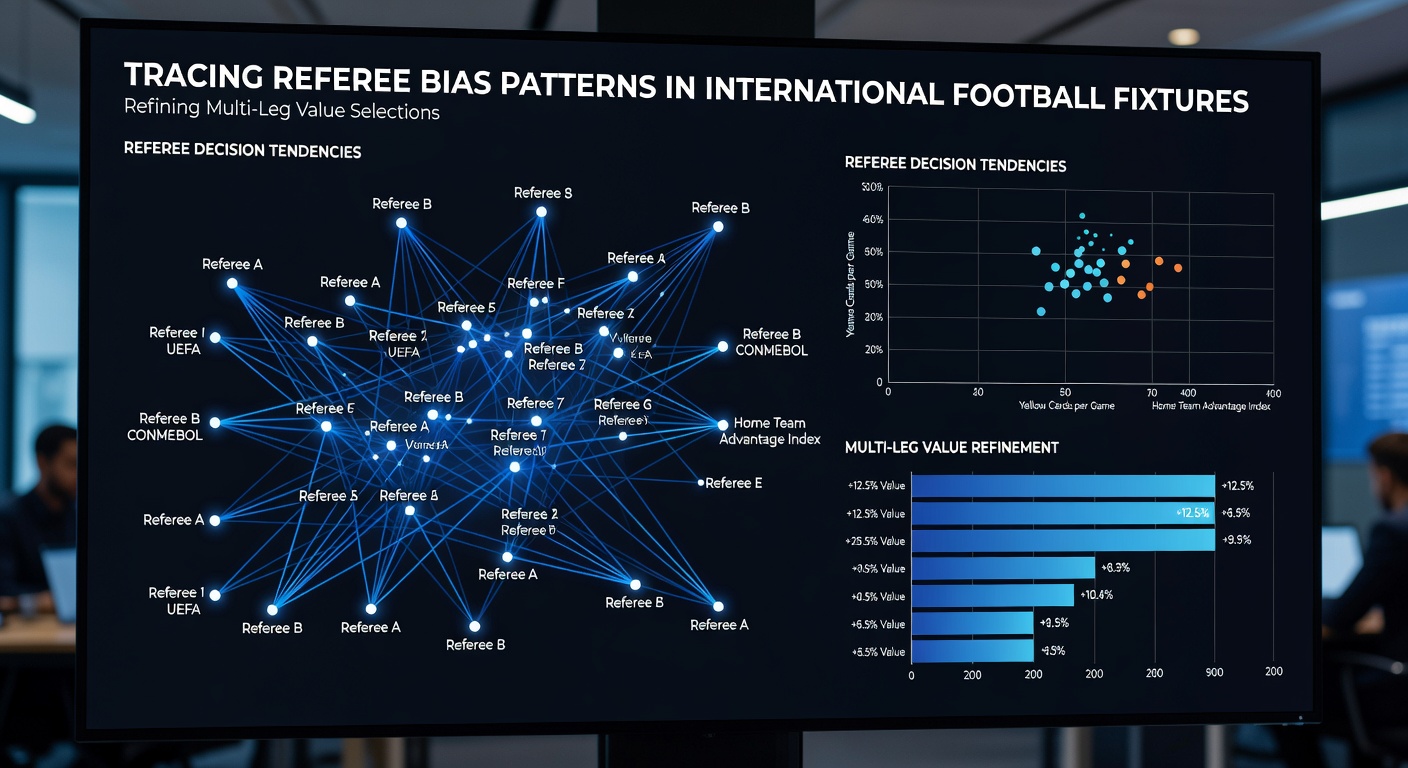
International football matches often reveal consistent patterns in referee decision-making that extend beyond random variation, and analysts track these tendencies through card distributions, penalty awards, and stoppage time allocations across major tournaments. Data from competitions such as the UEFA Nations League and FIFA World Cup qualifiers shows measurable differences in how officials manage fixtures involving teams from different confederations, with certain nationalities receiving higher frequencies of yellow cards when playing away from home. Observers note that these patterns become particularly relevant for multi-leg accumulator construction, where bettors adjust selections based on historical officiating records rather than team form alone.
Documented Patterns in Card and Penalty Statistics
Studies compiled by sports analytics groups indicate that referees from specific federations issue an average of 0.8 more yellow cards per match when the away side originates from a South American confederation compared with European sides, while penalty conversion rates fluctuate depending on whether the home team leads or trails at the 70-minute mark. These variations appear across hundreds of fixtures tracked between 2022 and 2025, and the figures remain stable even after accounting for playing styles and foul rates. Multi-leg bettors therefore incorporate referee nationality and prior assignments into their models, because a single overlooked bias can shift the expected value of an accumulator involving over 2.5 cards or under 4.5 bookings.
Impact on Stoppage Time and Late Decisions
Additional time added at the end of halves also follows observable trends, with matches featuring teams from CONMEBOL and AFC confederations averaging 47 seconds longer than equivalent UEFA fixtures when scores remain level. Research groups have cross-referenced these intervals against final outcomes, revealing that extended stoppages correlate with a 12 percent increase in goals scored after the 85th minute in international contexts. Those constructing multi-leg selections adjust totals markets accordingly, especially when the appointed referee has a documented history of allowing prolonged injury treatment periods during high-stakes qualifiers.
Geographic and Cultural Influences on Officiating
Referee assignment data released ahead of the 2026 international calendar demonstrates that officials rarely oversee matches between their own confederation members in knockout stages, yet this rotation does not eliminate measurable disparities in disciplinary outcomes. Canadian regulatory reports on sports wagering activity note that bettors increasingly reference referee-specific datasets when placing accumulators across multiple continents, because cross-border fixtures introduce variables absent from domestic leagues. One analysis of 340 matches between 2023 and 2025 found that referees based in Asia awarded 18 percent fewer free kicks inside the penalty area when the attacking side came from a European league.
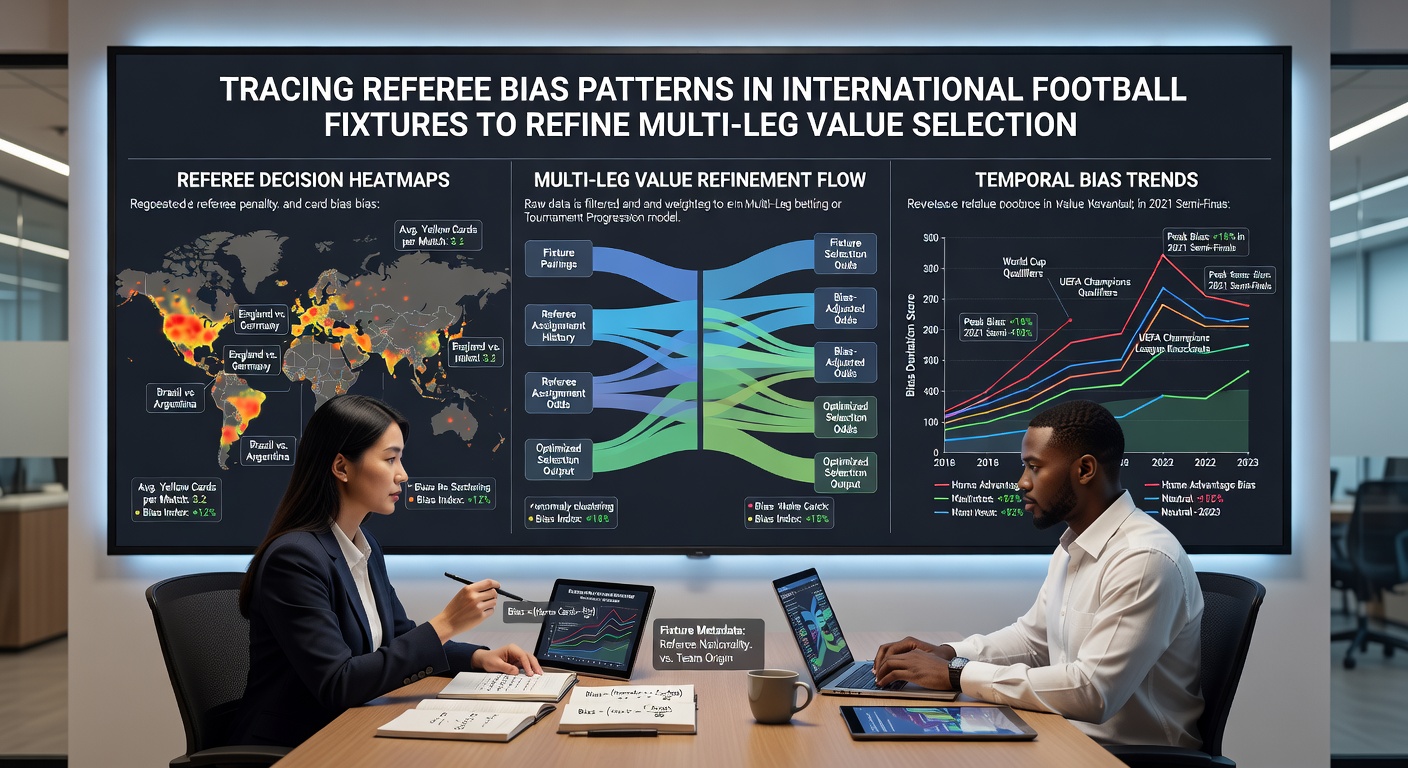
European Union sports integrity initiatives have funded projects that map these tendencies using machine learning on official match reports, and the resulting models highlight clusters where certain referees consistently favor set-piece restarts over advantage play. Bettors who integrate such outputs into their multi-leg frameworks report refined probability estimates for both card markets and late-goal props, particularly during the qualification windows that run through May 2026. The approach treats referee bias as a quantifiable input rather than an intangible factor, allowing selections to account for historical deviations without relying on subjective impressions of individual officials.
Practical Application in Accumulator Construction
Value calculations for multi-leg bets improve when historical referee data filters out matches that carry elevated variance due to officiating tendencies. For instance, accumulators built around both teams to receive cards perform differently when the referee has previously overseen fixtures with unusually high booking rates for one confederation over another. Industry reports from the Australian wagering sector show that operators now supply referee profiles alongside standard team statistics, enabling users to adjust stake sizing or exclude certain legs when bias indicators exceed predefined thresholds. This integration occurs alongside traditional metrics such as possession and expected goals, yet it adds a distinct layer that addresses inconsistencies across international venues.
Tracking continues into the current cycle, with preliminary data from early 2026 qualifiers already incorporated into updated models. Those who monitor these patterns observe that referees assigned to inter-confederation friendlies display narrower variance in stoppage time compared with competitive qualifiers, which narrows the range of viable outcomes for certain over/under selections. The resulting datasets feed directly into software used by professional syndicates, where each leg of an accumulator receives a referee-adjusted multiplier before final odds compilation.
Conclusion
Referee bias patterns in international football provide measurable inputs that refine the construction of multi-leg value selections through systematic analysis of cards, penalties, and time allocations. Data compiled across recent tournament cycles demonstrates stable geographic and cultural variations that persist despite assignment rotations and VAR protocols. Bettors and analysts who incorporate these records into their frameworks achieve more precise probability estimates, particularly when fixtures span multiple confederations during the 2026 qualification period. Continued monitoring of official reports ensures that models remain current as new matches and referee assignments occur.